



About Purpura
Purpura brings hand-produced cement tiles and the character of traditional craft into contemporary spaces through pattern, colour and considered composition.
An old craft. A new expression.
Purpura grew from Polish–Spanish roots and a wish to bring traditional cement tile making back into contemporary interiors. Historic patterns meet original designs and a personal choice of colours.
Each cement tile is made individually. Small variations in colour and pattern are part of the character of a surface made by hand.
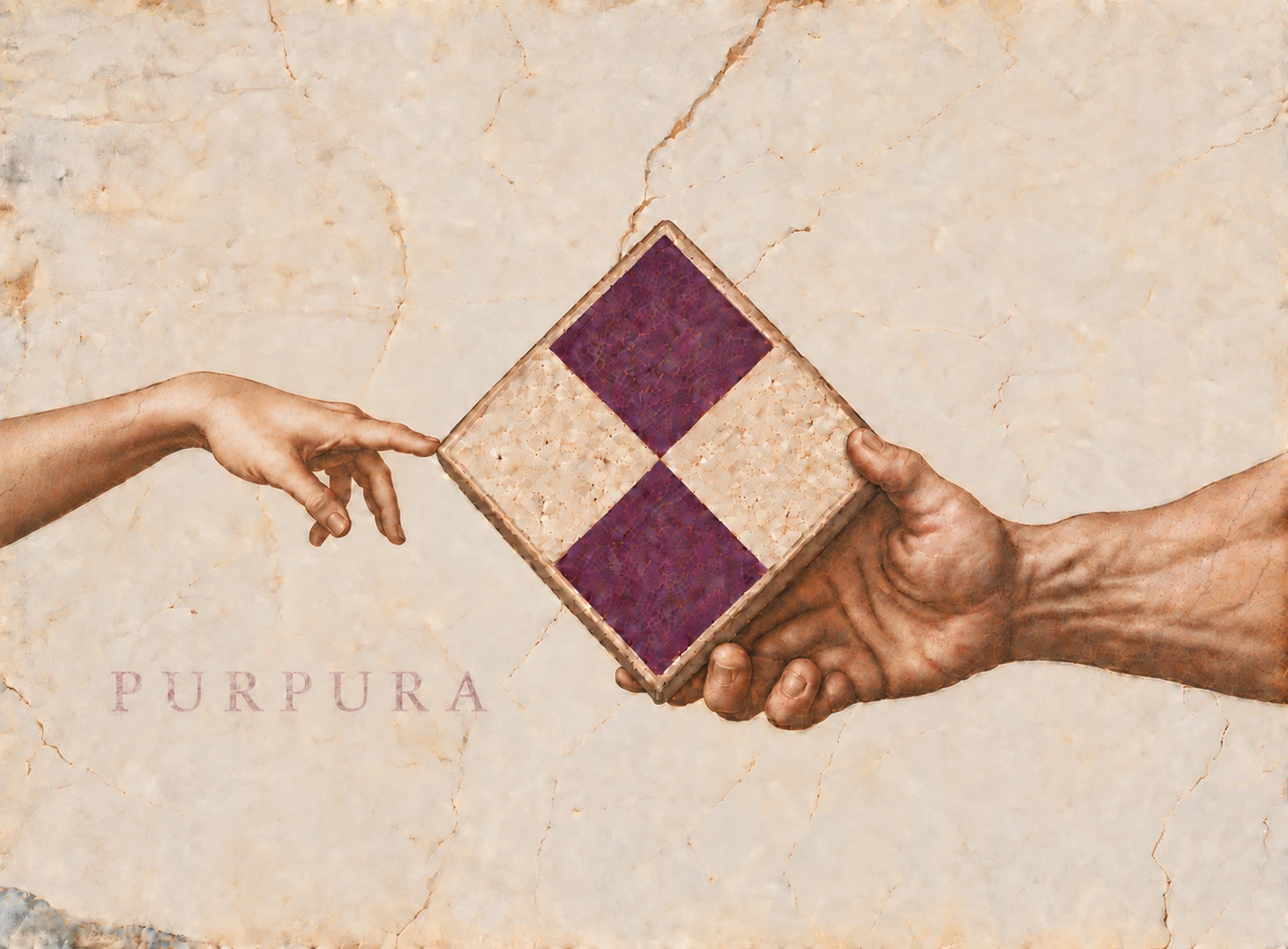
We are the craftsmen. You are the artist.
Purpura's cement tiles are produced by hand, with colour placed into a patterned mould before the tile takes shape. That patient work gives the material its character.
A single pattern can become a quiet rhythm, a bold field or a border that gives a room its shape. The digital studio lets you explore these combinations; the finished tile is a physical piece of craft.
Design your tiles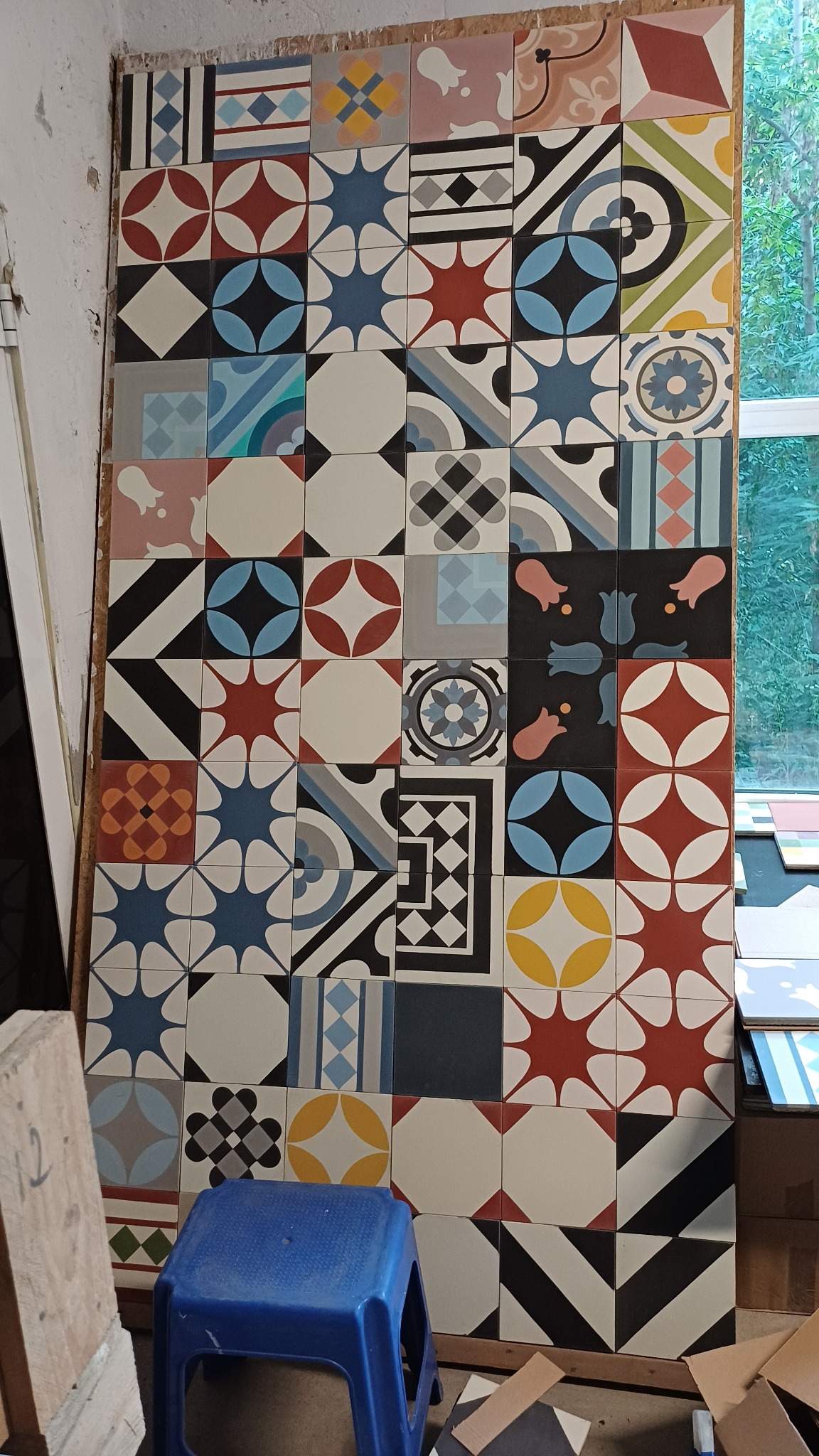
From pigment to finished tile.
Marble flour, cement, sand and mineral pigments become a tile through the patient work of human hands.
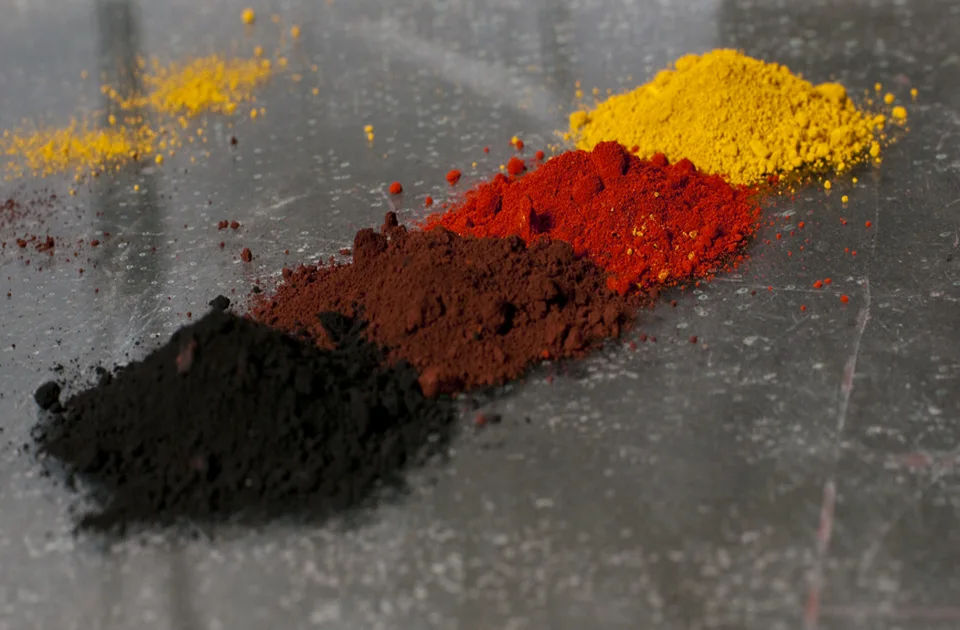
Colour begins here
Mineral pigments give the marble-and-cement surface its colour.
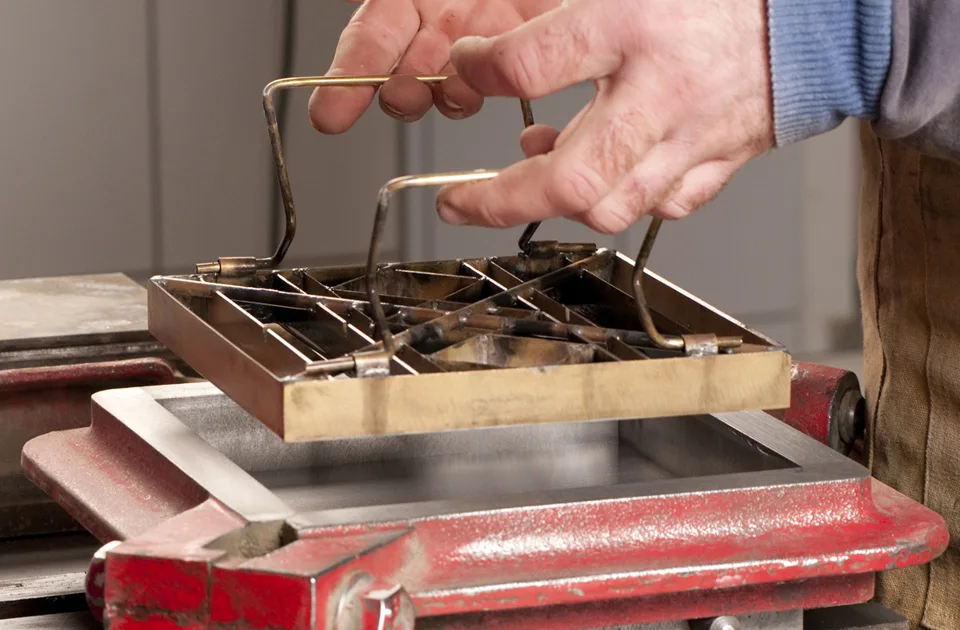
The pattern takes shape
Coloured mixtures fill the compartments of a metal pattern mould, which is then carefully lifted away.
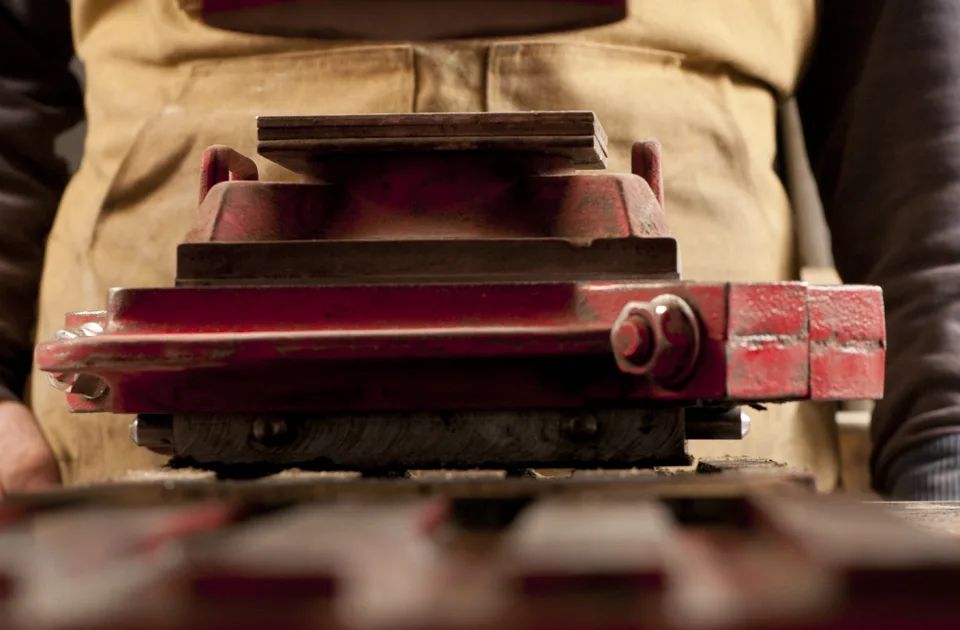
Pressed into form
The coloured surface and cement-and-sand backing are brought together under pressure.
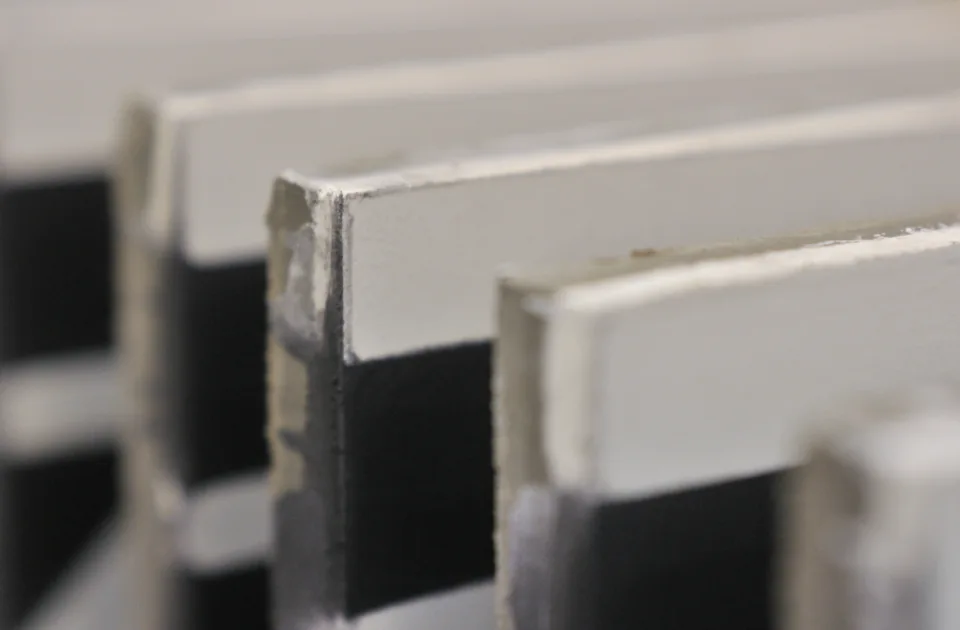
Time to mature
After pressing, the tiles cure and dry for approximately 28 days. During this time, the cement hardens and develops its strength.